Author name: ISRC

Study Abroad Guide

Singapore vs UK vs Australia vs Canada/US: Which Is Better for Indian Students in 2026?

Singapore vs UK vs Australia vs Canada/US: A balanced 2026 guide on which study destination suits Indian students best—pros, cons, immigration, cost & culture. —– Choosing where to study abroad is one of the most important decisions for Indian students. In 2026, four destinations remain highly popular: Singapore, UK, Australia, Canada/US. Each has strengths, challenges, and future trajectories. There’s no one-size-fits-all answer—it depends on your priorities: cost, immigration, program quality, cultural fit, and long-term goals. Use this as a decision compass (not a prescription). Singapore Pros Close to India / Familiar Region: Shorter travel times, easier family visits, somewhat closer culture & food familiarity. Strong reputation especially in design, arts, business & tech: Singapore’s educational institutions (e.g. NAFA, SMU, NUS, NTU, SIM, PSB, At Sunrice etc.) have global links. Safe, efficient, high standards: Clean city, infrastructure, public transport, safety are often cited in favor. Work & immigration pathways: Student pass system, post-study work options exist (e.g. Employment Pass, S Pass) though competitive. No huge time zone or cultural shock: Easier transitions than to Western countries for some students. Tuition & cost relatively moderate (compared globally): While not cheap, it can be more feasible compared to the US or UK for certain programs. Cons Limited number of seats in top courses: Some highly demanded majors have competitive entry cutoffs. Cost of living: Rent, food, transport in Singapore can be high, particularly in central areas. United Kingdom (UK) Pros Prestige & global recognition: UK universities hold strong brand value worldwide. One-year master’s programs: Many UK master’s are one year instead of two, saving time and cost. Post-study work route (Graduate visa): UK offers Graduate Route (often 2 years) for many international students. Rich research culture: Strong emphasis on research and interdisciplinary studies. Cultural diversity & language: English native, wide multicultural environment. Cons High tuition & living costs: London and southern England are very expensive; costs can eat into budgets. Stringent visa rules: Immigration changes, stricter work permit checks, and recently increased scrutiny. Shorter programs pressure: While 1-year masters are efficient, they also leave less room for adaptation or part-time work balance. Australia Pros Good work-study balance: Generous part-time work allowances during study, and strong post-study work rights (4-year skilled graduate visas). High-quality universities across multiple cities: Not just Sydney/Melbourne—regional universities offer quality with lower cost. Strong immigration pathways: Many students transition to skilled migration. Cultural diversity and outdoor lifestyle: Attractive environment, safe, with quality of life. Cons Distance from India & travel cost: Long flights, time zones, and expensive travel home. Tuition & living expenses: Especially in coastal major cities, costs are high. Competition & visa policy tightening: Australia’s immigration policies may tighten; skilled lists change. Regional disparity: The difference between major cities and regional areas in infrastructure, job opportunities, and amenities may be significant. Canada / United States (North America) Pros Large, diverse opportunities & job markets: Huge scale, many specialized industries, and high earning potential. Strong immigration pathways (Canada especially): Canada offers relatively generous post-study work and permanent residency options. Top-tier universities & research facilities: Global leaders in tech, medicine, business, etc. Wide program variety: From liberal arts to engineering to specialized fields. Alumni network & brand recognition: Degrees from US/Canada open global doors. Cons Very high cost: Tuition + health insurance + living + travel can add up steeply. Visa uncertainty & policy shifts: US immigration is volatile; Canada also adjusts PR/visa rules. With the international relations currently, the situation remains uncertain. Intense competition: Many international students, high standards, many rejections. Distance & cultural adjustment: Time zones, climate, long flights, cultural gap can be large hurdles. Current Relations, Geopolitics & Their Impact India–Singapore ties: Close cultural and economic links; favorable perceptions and bilateral agreements often help Indian students. These relations influence scholarship opportunities, visa processing speed, work policy clarity, and bilateral agreements. Students should monitor these evolving contexts when choosing destination. How to Choose the Right Country (A Practical Framework) Instead of just reading pros and cons, ask yourself these 5 practical questions: Question What It Means If You Answer “Yes”… 1. Do I want to stay abroad long-term? Focus on countries with easy PR. Consider Canada or Australia. 2. Is budget a big concern? Tuition + living + visa fees matter. Consider Singapore or regional Australia. 3. Am I aiming for a global brand name? Prestige can help in career credibility. Choose UK or US universities. 4. Do I want to work while studying? Helps financially and adds experience. All are ideal. This depends upon the course and the university you choose. 5. Do I prefer an Asian cultural setting? Less culture shock, easier adjustment. Singapore wins here. ✅ Tip: Make a simple 3-column sheet: ” Cost, Post-study, Fit ” and rank each country for yourself. It’s more insightful than any online ranking. Career Trends & Course Relevance (2026 Outlook) When choosing a destination, think beyond where to study — think what industries are growing in that country. Fast-Growing Fields (2026): FinTech, UX/UI, Sustainable Business, AI, Finance, Policy, Creative Industries, Data Analytics, Engineering, Healthcare, Cybersecurity, Education, AI, Green Tech, Public Health, Supply Chain, AI/ML, Space Tech, Biotech, Startups. 💡 Pro tip: Match your course with the destination’s local industry demand. For example, a Climate Tech degree makes more sense in Canada or Australia, while FinTech or Sustainable Business aligns perfectly with Singapore or UK. What Should Indian Students Do in 2026? There’s no one-size-fits-all answer. If you want career security + PR, go for Canada or Australia. If you want global prestige + speed, UK works best. If you value proximity + focused tech education, Singapore is unbeatable. If you dream of innovation + scale, aim for the US (with financial prep). Factors students should weigh: Total Cost vs ROI: Not just tuition, but living, travel, insurance, food. Job / Industry alignment: Does the country’s economy match your field (tech, business, environment)? Visa & PR stability: Predictability matters. Cultural Fit & Support: Social support, Indian diaspora, climate, food. Program structure & flexibility: Ability to do internships, coops,


Uncategorised

How Indian Students Can Crack University Interviews in 2026

Worried about university interviews in 2026? Discover insider tips, strategies, and common mistakes Indian students must avoid to crack admissions abroad. For Indian students dreaming of studying abroad in 2026, clearing a university interview is often the final hurdle. With global admissions becoming more competitive, universities don’t just assess grades and test scores—they want to see your personality, motivation, and potential. Think of it this way: your application got you to the door, but your interview is what helps you walk through it. This article is not about the basic “dress well, arrive on time” tips. Instead, we’ll dive into the best-kept strategies, insider hacks, and pitfalls to avoid- so you can stand out among thousands of applicants. Understand the Purpose of a University Interview in 2026 Universities abroad aren’t just asking questions for the sake of formality. By 2026, with AI-driven shortlisting systems, only students who genuinely look promising make it to the interview stage. They want to know: Can you communicate clearly in an academic and social setting? Are you truly passionate about the course, or is this just a backup option? Do you understand the real-world application of your chosen field? Will you be a valuable addition to their student community? 👉 Insider Tip: Before you even practice questions, ask yourself why this course, this university, and this country. A clear “why” forms the backbone of your interview answers. 2. Research Beyond the Website Most students memorize the “About Us” page of a university website. But admission officers can tell when you’re repeating textbook lines. Instead, dig deeper: Look at faculty profiles and mention professors whose work inspires you. Check LinkedIn alumni- see where graduates from your program are working. Read recent research papers, rankings, or news articles about the university. When you say, “I was fascinated by Professor X’s work in renewable energy and how the university collaborates with industry on climate solutions,”- you’re already 10 steps ahead of generic applicants. 3. Master the “Why This Course” Question This is the most common, yet most underestimated question. In 2026, with AI-generated SOPs becoming more common, universities are testing whether you can speak beyond your written words. Strong answer formula: Your background: Link past academics or experiences. Your motivation: Why you’re genuinely interested. Your future goals: Career path and how the program bridges the gap. Weak Answer: “I like computers, so I want to study IT.”Strong Answer: “During my internship at XYZ, I realized how cybersecurity impacts businesses. The MSc Cyber Security program at PSB will give me the global perspective and technical expertise to protect organizations in India and abroad.” 4. Prepare for Behavioral Questions 2026 interviews are no longer just academic—they’re testing your adaptability and emotional intelligence. Expect questions like: “Tell us about a time you failed and how you handled it.” “How would you work with peers from different cultures?” “What’s a challenge Indian students face abroad, and how would you overcome it?” Use the STAR method (Situation, Task, Action, Result). It keeps your answers structured and impactful. 5. AI & Online Interviews: The New Normal Post-2024, many universities shifted to AI-assisted online interviews where facial expressions, tone, and response time may be analyzed. Tips for AI-driven interviews: Ensure good lighting and a neutral background. Speak naturally (not like a robot reading a script). Maintain eye contact with the camera. Smile—yes, AI notices confidence cues! 6. Cultural Fit Matters More Than You Think Universities abroad don’t just want “good students”; they want global citizens.Show how you’ll: Contribute to student clubs, volunteering, or cultural activities. Adapt to multicultural classrooms. Bring your Indian perspective into global discussions. 👉 Example: If applying for Sustainable Business, highlight how you want to explore ESG but also apply learnings to India’s growing green economy. 7. Practice, But Don’t Sound Scripted Many Indian students memorize answers word-for-word, which comes across unnatural. Instead: Record yourself answering common questions. Practice with a mentor or peer in mock interviews. Focus on confidence and clarity, not perfection. 8. Anticipate Curveball Questions Interviewers often throw unexpected questions to test critical thinking. For example: “If AI takes over your chosen field in 10 years, what will you do?” “How does your culture influence your perspective on education?” “What book or podcast recently changed your thinking?” Hack: Take a pause, smile, and structure your answer. Interviewers value thoughtful responses over rushed ones. 9. Avoid These Common Mistakes Overemphasizing financial reasons (“This country is cheaper”) Copying SOP statements word-for-word Speaking only about academics, ignoring cultural fit Overconfidence or arrogance Failing to ask the interviewer a question back (shows lack of curiosity) Always ask one smart question at the end, e.g., “How does your program collaborate with industry partners on real-world projects?” 10. The Follow-Up Few students send thank-you notes, but it makes a big difference. A short, polite email: Reiterate your excitement about the program. Mention one highlight from the interview. Keep it professional, not desperate. Cracking a university interview in 2026 as an Indian student isn’t about rehearsed answers or fancy English—it’s about authenticity, clarity, and preparation. Universities want students who can adapt, think critically, and bring fresh perspectives to the classroom. By researching deeply, practicing behavioral answers, and showing cultural fit, you don’t just pass the interview—you stand out as someone ready for a global journey. For Indian students, this is your chance not just to secure admission but to start building your global identity.

Uncategorised

AI & Automation in 2026 – Are Traditional Degrees Still Worth It for Indian Students?

As AI and automation reshape the job market in 2026, this article explores whether traditional degrees still hold value for Indian students- or if skill-based learning is taking over. The rise of AI and automation is not a distant future- it’s now. In 2026, many industries are redefining roles, processes, and expectations. For Indian students, this shift begs a critical question: Do traditional degrees still matter in a world increasingly dominated by machines and skills? This article dives into how the value of degrees is changing, how skill-based learning is gaining momentum, and what Indian students can do to stay ahead of the curve. The Changing Landscape: Automation, AI & Work Automation and AI have accelerated the demand for technical and soft skills. The McKinsey “Skill Shift” report has long predicted that automation will reshape the skills needed across jobs—technological, emotional, and cognitive skills will see higher demand. McKinsey & Company Recent studies also show that in AI and green jobs, the percentage of roles listing a degree requirement has dropped by about 15%, while demand for specific skills is rising by 21%. arXiv In this environment, job descriptions are less likely to demand a “degree in X” and more likely to ask for “experience with tool Y, project Z, domain knowledge in AI or data.” Pros of Traditional Degrees (That Still Hold Strength) Structured Learning & DepthDegrees provide a curriculum across theory, fundamentals, and domain knowledge—giving a strong foundation that’s hard to replicate in short courses. Credibility & Screening SignalMany institutions and hiring managers still use degrees as a baseline filter. Having a recognized degree can help you pass that first cut. Access to Networks & ResourcesUniversities often offer mentorship, internships, alumni networks, research exposure, and brand value. Long-Term VersatilityA degree may allow you to pivot fields later (e.g. from engineering to business), because it teaches critical thinking, frameworks, and a broad skillset. Why Skill-Based Learning Is Gaining Ground Faster, More Focused LearningSkill-based paths (bootcamps, micro credentials, online courses) remove unnecessary “padding” and let you master exactly what’s valued in the job market. Lower Cost & TimeThey often cost a fraction of a degree and can be completed faster, making them more accessible, especially for those with financial constraints. Direct Industry RelevanceMany of these programs are co-created with companies, ensuring the skills taught match job descriptions. A recent study found that coupling a degree with targeted certifications significantly improved job alignment. Flexibility & Lifelong LearningThese paths let you adapt quickly as technology evolves—taking short sprints of learning yearly instead of committing 3–4 years in one direction. The Hybrid Future: Merging Degrees + Skills The most promising model in 2026 is not one or the other—it’s both. Think of it as “degree + skill stack.” Use your degree as the foundation and layer in certifications in AI, data, cloud, automation tools. Universities and bootcamps are already pairing curricula (e.g. “stackable credentials”) so students can pick modules as they advance. For instance, a computer science undergrad might do a specialization in machine learning, followed by a certification in ethical AI or automation platforms. This hybrid path blends depth, adaptability, and direct employability. What Indian Students Need to Consider Check Course Outcomes, Not Just NamesLook at alumni success, industry tie-ups, internship stats. Certifications Matter in 2026Tools like Microsoft AI-900, AWS ML, RPA certifications significantly boost job alignment. arXiv Soft Skills & Human EdgeAI can’t replace emotional intelligence, ethics judgment, creativity, leadership—these remain critical. Build a Real PortfolioWork on projects, internships, open source contributions—proof matters more than transcripts. Stay Adaptable & Continue LearningDon’t think education ends at graduation; take micro-courses or specializations yearly to stay relevant. In 2026, traditional degrees are not dead—but they are evolving. For Indian students, the smartest path is to ground yourself in a solid degree and hedge it with skill-based layers that match what today’s employers want. With AI and automation redefining how work is done, your resilience lies in your capacity to learn, adapt, and demonstrate value—not just your degree title. If you’re thinking of studying abroad in a changing world, we at ISRC can help you choose the right mix of degree + skill credentials to future-proof your career. Book a one-on-one consultation with an ISRC advisor- we’ll review your preferred destination, explain the visa work rules, and help you plan a study + work strategy that protects your visa and your studies. Contact: info@isrc.edu.in (mail) | +91-87545-46093 (Call/ Whatsapp)

Uncategorised

How AI Tools Are Changing the Application Process for Indian Students in 2026

For Indian students applying abroad in 2026, Artificial Intelligence (AI) has become both a friend and a disruptor. From shortlisting universities to drafting SOPs, AI tools are shaping how applications are written, reviewed, and even accepted. This blog uncovers how AI is changing the application process for Indian students- and what you need to do to stay ahead without falling into common pitfalls. AI in University Shortlisting Gone are the days of guesswork. Platforms powered by AI now: Analyze student profiles (grades, field etc.) against thousands of universities. Provide match scores showing chances of acceptance. Save Indian students months of research. But beware- AI is only as accurate as the data you input. Garbage in = garbage out. AI in SOP & Essay Writing AI writing assistants in 2026 can: Generate SOP drafts in minutes. Suggest stronger wording based on successful past admissions. Check tone, grammar, and plagiarism instantly. Caution: Admissions officers can now detect AI-generated content. Indian students must blend AI help with authentic personal storytelling. AI in Resume & Profile Building AI-driven platforms optimize resumes for Applicant Tracking Systems (ATS). Tools now compare your resume with actual job/degree descriptions and highlight missing skills. Indian students applying abroad can tailor their profiles faster. AI-Powered Admissions Platforms Universities themselves are using AI in 2026 to: Screen SOPs for originality. Predict student success based on academic history. Automate interview scheduling with chatbots. This means competition is stricter—Indian students must present authentic and unique applications. AI for Visa Applications AI platforms guide students step-by-step through visa forms. Automated error detection reduces rejections. Some embassies use AI to flag “suspicious” applications. Indian students in 2026 must ensure their applications remain truthful and consistent across all documents. Language & Test Prep With AI AI-driven apps for IELTS, TOEFL, GRE, GMAT offer adaptive learning. Real-time feedback on pronunciation and essay writing helps students perform better. AI tutors adjust difficulty based on individual weaknesses. The Dark Side: Risks of Overusing AI Generic Applications: Too much reliance on AI makes SOPs sound robotic. Ethical Concerns: Some universities may reject applications suspected of AI overuse. Data Privacy: Not all AI platforms are secure—Indian students must protect personal data. Future of AI in Study Abroad Applications By 2026, experts predict: AI-powered virtual admission interviews will be common. Universities may use predictive analytics to assess which students are likely to enroll. Indian students who know how to balance AI assistance with authenticity will have the highest success rates. Practical Tips for Indian Students in 2026 Use AI for drafting, but always personalize with real experiences. Run SOPs through plagiarism detectors. Cross-check AI-generated university lists with official websites. Use trusted AI tools that comply with data safety standards. Stay authentic- AI should support, not replace your voice. AI has revolutionized the study abroad application process in 2026. For Indian students, it’s a double-edged sword- use it well, and it can streamline everything from SOPs to visas. Use it poorly, and your application may feel generic or even be flagged. The smartest approach is to embrace AI as a guide while keeping your application deeply personal and authentic Book a one-on-one consultation with an ISRC advisor- we’ll review your preferred destination, explain the visa work rules, and help you plan a study + work strategy that protects your visa and your studies. Contact: info@isrc.edu.in (mail) | +91-87545-43635 (Call/ Whatsapp)

Uncategorised

How Indian Students Can Network Abroad and Land Global Jobs in 2026

For Indian students, studying abroad in 2026 isn’t just about classrooms and campuses, it’s about building global opportunities. While degrees open doors, it’s networking that gets you through them. From LinkedIn connections to alumni networks and industry events, how you connect with people abroad can determine whether you land your dream job or miss the chance. This blog dives deep into the best networking strategies for Indian students abroad in 2026, ensuring you not only graduate but also step into global careers. Why Networking Matters More Than Ever in 2026 Competition is global: With AI-driven hiring platforms, recruiters now have access to talent worldwide. Networking sets you apart. Hidden job market: Reports show up to 70% of jobs are never publicly advertised. Networking helps Indian students tap into these “invisible” roles. Visa challenges: Employers abroad are selective with sponsorships. Personal recommendations and referrals help bypass barriers. The Mindset Shift Indian Students Need Abroad Networking isn’t about collecting business cards- it’s about building relationships. The key is to shift from “What can I get?” to “What value can I offer?” For Indian students: Share your unique perspective on tech, innovation, or culture. Offer to collaborate on student projects. Create genuine bonds, not transactional ones. Leveraging University Resources Career Services: Most universities abroad in 2026 host networking nights, mock interviews, and corporate mixers. Alumni Platforms: Join LinkedIn groups and alumni portals specific to Indian graduates. Alumni are often the most supportive connectors. Faculty Introductions: Professors abroad often have industry links- use them wisely. Digital Networking in 2026: Going Beyond LinkedIn LinkedIn Mastery: Optimize your profile with keywords like “Indian student | Data Analyst | 2026 graduate”. Engage by posting insights, not just applying. Industry-specific platforms: GitHub (for coders), Behance (for creatives), and ResearchGate (for scholars). AI-driven networking apps: Platforms like Lunchclub are helping Indian students connect with mentors and recruiters abroad. Cultural Sensitivity in Networking Adapt communication styles: In the US, directness is valued; in Japan, respect and hierarchy matter. Small talk is big talk: Sports, travel, or food can open doors faster than a resume. Overcome hesitation: Many Indian students abroad struggle with confidence. Practice elevator pitches tailored to cultural norms. Attending Conferences and Job Fairs 2026 has seen a rise in hybrid conferences. Indian students can now: Attend global events virtually at lower cost. Secure student discounts for career expos. Follow up with speakers on LinkedIn to build long-term connections. Internships and Part-Time Jobs as Networking Gateways Don’t underestimate campus jobs- they often connect you to faculty and administrators with global links. Internships can turn into full-time offers when you build strong professional relationships. Join student clubs related to your field (tech, arts, business) to expand circles. Success Stories of Indian Students Abroad A CBSE graduate in Canada landed a tech consulting job after connecting with a recruiter at a hackathon. An Indian MBA student in Germany turned a part-time research assistant role into a full-time consulting career through faculty referrals. Mistakes Indian Students Must Avoid in Networking Spamming LinkedIn with connection requests. Asking for jobs immediately instead of building trust. Focusing only on Indian circles abroad, rather than expanding globally. Action Plan for 2026 Indian Students Abroad Join 2 student clubs related to your field.Attend atleast 3 career events.Post insights once a week on LinkedIn.Build an alumni contact list.Follow up with 5 new connections monthly. Networking is the new currency in 2026. For Indian students abroad, building meaningful relationships is no longer optional, it’s the only way to land global jobs in a highly competitive market. With the right strategy, cultural awareness, and consistent effort, Indian students can transform casual connections into career-defining opportunities. Book a one-on-one consultation with an ISRC advisor- we’ll review your preferred destination, explain the visa work rules, and help you plan a study + work strategy that protects your visa and your studies. Contact: info@isrc.edu.in (mail) | +91-87545-43635 (Call/ Whatsapp)

Must Know to study abroad, Study Abroad Guide

CBSE vs ICSE vs IB Abroad (2025–26): Which Curriculum Gives You an Edge?

Comparing CBSE, ICSE and IB for study abroad in 2025–26: recognition, admissions, subject prep, and practical advantages for Indian students. With competitive admissions and evolving entry rules, families often ask whether switching from an Indian board to IB improves admission odds. Global universities keep reiterating that they set course-by-course requirements and accept a range of qualifications—what matters is meeting (and exceeding) those specifics. Are these boards accepted? IB The IB Diploma is recognized by 4,500+ universities in 110+ countries; the IB itself maintains a recognition database for admissions and potential credit. (International Baccalaureate®, IBO Recognition System) CBSE/ICSE United Kingdom: Country pages at individual universities detail thresholds. Example: University of Manchester lists direct entry ranges (often 80–95% overall for CBSE/ISC, varying by course). (manchester.ac.uk) Singapore: NUS accepts Indian Standard 12 (CBSE/ISC) with a “good pass” in five subjects (English included) and notes program-level exceptions for highly selective courses. NTU provides a dedicated India Standard 12 pathway. (NUS, NUS, Corporate NTU) Australia: Multiple universities explicitly recognize CBSE/ISC and state boards (with differing thresholds)—e.g., Sydney, Melbourne, Adelaide, UWA, UTAS. (The University of Sydney, Study, International Students, The University of Western Australia, University of Tasmania) Canada: Universities outline academic and degree-specific requirements for international high schools; policies vary by program and campus (example: UBC pages). (you.ubc.ca, UBC Academic Calendar) Bottom line: All three pathways are legitimate for global admissions. The edge is how strongly you meet course-specific requirements and present your profile. Curriculum design & preparation: Where each can help   IB Diploma: breadth + depth + “university behaviors” Structure: 6 subjects with HL/SL levels + TOK, Extended Essay, CAS—often valued for research/critical thinking and independent learning, skills universities like. (Herald Sun) Potential benefits: Easier benchmarking across countries; some universities offer advanced standing/credit (check the IB recognition finder and each university’s policy). (IBO Recognition System) When it helps most: Programs demanding evidence of higher-level Math/Science, research ability, or when credit could reduce course load/time (policy dependent). (IBO Recognition System) CBSE/ICSE: strong subject mastery and exam rigor Structure: Deep exam preparation and syllabus alignment to competitive entrance tests can be advantageous for STEM foundations and time management. Global fit: Directly accepted for undergrad entry in the UK, Singapore, Australia, and Canada—with clear percentage cutoffs and subject prerequisites. (manchester.ac.uk, NUS, The University of Sydney, International Students) When it helps most: Courses where board exam percentages and specific subjects (e.g., Math/Physics/Chemistry) drive evaluation. Key insight: Admissions teams compare what you studied (subject rigor), how well you performed, and whether you meet the program’s prerequisites—not just the board name. Country-by-country realities (examples) United Kingdom Universities publish Indian Standard XII and IB requirements. Typical expectations may range widely by course and university (e.g., Manchester’s 80–95% for CBSE/ISCE; IB points bands for context). Always verify course pages for subject-specific demands (e.g., HL Math for CS/Econ). Singapore NUS/NTU accept CBSE/ISCE directly. NUS highlights eligibility for most programs with Class 12, noting exceptions for certain professional paths. Requirements can include strong results in five subjects including English. Australia Broad, transparent recognition of CBSE/ISC and IB across leading universities, with ATAR equivalences or percentage cutoffs published at each institution (e.g., Sydney, Melbourne, Adelaide, UWA, UTAS). Canada Universities like UBC describe general and degree-specific criteria for international curricula; precise thresholds are set by faculties/programs (e.g., minimum grades in senior-level English, plus prerequisites). IB and Indian boards are considered; details vary by program. Where IB might feel like an “advantage” Global comparability & signaling: One standardized framework across countries often makes it easier for evaluators to benchmark—useful for highly international universities. (International Baccalaureate®) HL subjects that map to prerequisites: HL Math/Sciences can satisfy tough prerequisites cleanly for STEM, Econ, and Business in some regions. (Always check course pages.) (UCAS) Potential advanced credit: Some schools grant credit/advanced standing for strong IB scores—can save time/money (policy-by-policy). (IBO Recognition System) Research & writing evidence: TOK/EE can demonstrate academic writing and inquiry, helpful in courses that value research readiness. (Herald Sun) Where CBSE/ICSE hold their own (or shine) Clear thresholds for direct entry: Many universities publish straightforward percentage bands for Indian boards, easing planning for applicants. Strong discipline rigor: The exam-heavy format builds content mastery—useful for first-year success in quantitative or content-dense majors. Availability & cost: CBSE/ICSE are more widely available across India, with fewer transitions needed; focus can stay on maximizing board marks and required subjects. Singapore & Australia alignment: Direct acceptance with explicit criteria by numerous top universities. The real admissions levers (regardless of board) Subject prerequisites met at the right level. E.g., HL Math or 85–95% in Class XII Mathematics—whatever the course page specifies. High overall performance. Whether that’s IB points or XII aggregate, marks matter for competitive programs. Country-specific rules. Some universities publish board-specific formulas/equivalences (e.g., ATAR/percent mappings in Australia). Check the institution’s India page. English proficiency (if required). Even when schooling is in English, universities may set minimums by program/campus; always verify. Extras where relevant: Portfolios (Design/Architecture), auditions (Performing Arts), and standardized tests (as program-specific). Common myths—debunked Myth 1: “IB is always better for admissions.” Reality: Admissions teams accept many credentials and judge fit + grades + prerequisites. IB can help with credit/benchmarking in some cases, but CBSE/ICSE students are admitted worldwide with strong results. Myth 2: “UK/Singapore don’t take Indian boards.” Reality: They do—often with clear criteria and program-level exceptions (e.g., certain professional degrees). Myth 3: “Only IB students get advanced credit.” Reality: Credit policies vary; some schools also award credit for A-levels/AP. For IB, use the IB recognition database and each university’s policy. How to choose- practical framework for Indian families Start with target countries/programs. Pull 3–5 course pages and list must-have subjects (Math type/level, required sciences, portfolio needs). Universities set their own criteria. Map your board to prerequisites. If you’re already in CBSE/ICSE and can take the right subject combinations (e.g., PCM with advanced Math), stay the course and chase top marks. If you anticipate applying to majors that strongly prefer defined higher-level coursework (e.g., HL Math), IB may simplify prerequisite signaling. Consider workload and strengths. IB’s internal assessments/EE/TOK demand

Study Abroad Guide

Top Student-Friendly Countries Abroad That Aren’t Overhyped | Hidden Gems for Indian Students

  Explore affordable, student-friendly countries beyond mainstream hubs—ideal for Indian students seeking quality education, cost savings, and a vibrant lifestyle in 2025–26. Why Look Beyond the Usual Study Abroad Destinations? For many Indian students, the usual study abroad choices—like the USA, UK, Canada, or Australia—come with steep costs and intense competition. It’s time to uncover underrated countries that deliver excellent education, livability, cultural experience, and affordability. In 2025–26, budget-savvy students are exploring hidden gems offering more value for money, an authentic student experience, and less crowding. Top Hidden-Gem Countries for Indian Students 1. Portugal Why It Stands Out: Western European education at lower costs. Tuition: ~€1,000–€2,500/year (public universities) Living Costs: ~€700–€1,000/month in Lisbon; Porto notably 22% cheaper than Lisbon Why It Matters: Lisbon’s coastal charm and affordability make it a viable, less exhaustively marketed choice. 2. Poland Why It Stands Out: Academic richness meets Eastern Europe affordability. Tuition: ~€2,000/year Living Costs: Under €700/month in Kraków; even more affordable in cities like Wrocław, Poznań, Gdańsk Why It Matters: Rich cultural heritage, historic campuses, and active student life at a fraction of Western costs. 3. Czech Republic Why It Stands Out: Central European access, affordable living. Tuition & Costs: Modest tuition; cost of living around €600–€800/month Why It Matters: Prague’s charm and Brno’s growing innovation environment make them ideal for students wanting culture and modernity. 4. Hungary Why It Stands Out: Architectural beauty, lively nightlife, affordability. Tuition & Living Costs: Affordable education and lifestyle costs, great student atmosphere Why It Matters: Thermal baths and historic student culture create a vibrant backdrop for studies. 5. Lithuania Why It Stands Out: Emerging academic hub with low cost of living. Renowned For: Safety, affordability, free or cheap education Why It Matters: Ranked among Europe’s happiest and safest, offering green spaces and excellent digital infrastructure. 6. Serbia Why It Stands Out: Electric nightlife and historic charm. Affordability: €1.50 for a beer, €0.90 for public transit Why It Matters: Belgrade offers dynamic student living, rich culture, and wallet-friendly prices perfect for Indian students. 7. Romania Why It Stands Out: Eastern European cost efficiency and cultural diversity. Tuition & Costs: Tuition under €2,500/year; living around €500–€700/month Why It Matters: Named European Capital of Culture, Timișoara delivers lively innovation and community spirit. 8. Slovenia Why It Stands Out: Compact, safe, and green city experience. Estimated Costs: Rent ~€250/month; food ~€5–10; transport ~€20/month Why It Matters: Walkable, scenic, and quietly charming—perfect for students who value calm and eco-conscious living. 9. Netherlands Why It Stands Out: University-driven town with active lifestyle. Student Life: 25% student population, world-class institutions, biking culture Why It Matters: Green, youthful, and academically dynamic—great if you prefer a smaller European city with strong educational roots. 10. Germany Why It Stands Out: No tuition, low living costs compared to Berlin or Munich. Living Costs: Rent: €250–400/month; deposited account requirement around €992/month Why It Matters: Affordable German city living with vibrant student scenes and historical depth. Hidden Insights & Trends for 2025–26 Indian Trend Shift to Europe: Students from Indian cities, like Lucknow, are increasingly favoring affordable European destinations due to cost-effectiveness and better visa/work prospects—student outbound increased 40% year-on-year Happiness & Quality of Life Matter: Cities like Vilnius rank highly in student satisfaction and well-being, offering safety, low living costs, and a relaxed culture. Overhyped Destinations Losing Shine: QS top global student cities (London, Tokyo, Melbourne, etc.) remain prestigious, but their cost and competition make hidden gems more attractive for Indian students seeking value. Pro Tips for Indian Students Choosing a Hidden-Gem Destination Check Program Quality & Language: Prioritize programs offered in English and universities recognized in global rankings. Visa & Work Openness: Many countries above offer part-time work options or favorable post-study work rules. Estimate Full Cost of Living: Factor in rent, food, transport, healthcare, and internet—not just tuition. Cultural Fit Matters: Think about safety, community, and social life. Cities like Vilnius, Kraków, Belgrade offer welcoming environments. Travel Proximity: Central European cities like Ljubljana, Brno, Vilnius give easy access to explore Europe affordably. Final Thoughts In 2025–26, the smartest international education move isn’t always heading to big-name cities—it’s exploring underrated countries that blend affordability, quality, safety, and cultural richness. As cost continues to be a critical factor, these hidden-gem nations give Indian students the chance to get more for their earnings, enjoy life fully, and graduate with less financial burden. Disclaimer Costs and situations are approximate estimations for 2025–26 based on current data. Always confirm specifics like tuition, exchange rates, housing, and admission criteria on official university and government portals. Want help shortlisting programs and destinations based on your budget and interests? Reach out to ISRC— our consultants can guide you to the smartest study abroad path.

Must Know to study abroad, Study Abroad Guide

The ROI of Studying Abroad: Which Degrees Actually Pay Off for Indian Students in 2026?

Discover which degrees offer the highest return on investment for Indian students studying abroad. Data-backed ROI insights for 2026 helps you make smart education decisions. Investing in an international education is a major decision- especially when you’re an Indian student balancing cost, career goals, and global opportunities. Return on Investment (ROI) matters more than ever. Which degrees actually pay off? Based on the latest trends and labor market shifts in 2025–26, this blog reveals the highest ROI degrees for Indian students studying abroad- backed by salary projections, industry demand, and career pathways. Whether you’re planning for STEM, business, or creative fields, here’s your data-driven guide. 1. Computer Science & Artificial Intelligence (AI) According to HubspotEdu, global salaries for CS & AI graduates range between USD 90,000–150,000 annually. These fields dominate demand across USA, Canada, UK, Germany, and Singapore.The Times of India underscores that CS/IT and AI degrees offer the strongest ROI and job security for Indian students globally.A Times of India comparison between Marketing vs Business Analytics also shows that Business Analytics tends to edge out in ROI due to high salaries and demand (The Times of India) Why it pays off: With tech companies offering top-tier salaries and global prospects, and many paying little to no tuition (e.g., Germany), pursuing CS/AI consistently delivers standout returns. 2. Engineering (General, Renewable, Civil, Mechanical) Engineering remains a reliable high-ROI degree. Average salaries are estimated around USD 85,000.Engineering is roughly ranked (across specialties) as among the top ROI fields, especially in Germany and Canada with tech-driven immigration pathways. Articles reinforce that engineering’s pay and job stability globally. Key advantage for Indian students: Countries with low tuition (Germany) or post-study immigration (Canada) amplify ROI for engineering grads. 3. Data Science, Business Analytics & FinTech Some reports state that the starting salaries are of USD 80,000–130,000 for business analytics graduates. Beyond this, emerging fields like sustainability are gaining traction—salaries of USD 50,000–90,000 are becoming common Why it’s smart: Rapid industry demand plus strong salaries—even mid-tier universities offer excellent ROI here. 4. Healthcare, Medicine, Nursing Medical and healthcare degrees offer some of the most substantial earnings—with MD/MBBS roles pulling between USD 180,000–210,000 per year.The global nursing shortage, especially in countries like Germany and Canada, means strong ROI even for allied health professions.Indian students benefit from career stability and attractive salary-to-cost ratios in these fields. 5. MBA & Business Degrees Management disciplines continue to deliver strong outcomes. HubspotEdu finds MBAs frequently unlock salaries of USD 100,000–200,000. Fields like marketing, business analytics, and finance consistently top ROI charts. Takeaway: For Indian students with work experience, an MBA can accelerate both income and career progression, especially in global business hubs. 6. High-ROI Country Breakdown Indra Global identifies destinations like Canada, Germany, Australia, UK, USA, Ireland, and New Zealand as top ROI-friendly places- thanks to low tuition, solid visa policies, and strong post-graduate job markets.Furthermore, Pfec Global’s country-wise ROI estimates show average starting salaries around: Australia: AUD 60,000 (~₹36 lakh USD equivalent) approx. USA: USD 50,000 approx. UK: £30,000 approx. Canada: CAD 50,000 approx. Ireland: €30,000 approx. 7. ROI Beyond Numbers: Trends & Cautions Indian student mobility is booming— over 330,000 in the USA alone, projected to reach 1 million annually by 2030. But ROI is not guaranteed. Harvard alumnus Rajesh Sawhney warns that overseas degrees no longer guarantee success—market shifts and AI disruption require strategic degree-path alignment. Tip: Seek degrees aligned with in-demand skills, career pathways, and emerging economies—not just prestige. 8. Maximize ROI With Certifications & Skills Emerging research shows that pairing a CS degree with certifications like AI-900 can significantly boost employability for tech roles—sometimes exceeding the premium of degrees alone.Skill-focused hiring in AI and sustainability sectors is trending—employers value demonstrable skills as much as degrees. Smart tip: Supplement your degree with industry-aligned certifications to future-proof your ROI. ROI Snapshot Degree Field Avg Salary (USD) Why It Pays Off Computer Science / AI $90,000–150,000 Top-tech demand, global placements Engineering (all branches) ~$85,000 High demand + affordable education Data Science / Analytics $80,000–130,000 Booming demand, data revolution Healthcare (Nursing/MD) $180,000–210,000 Global shortage + high salaries MBA / Business Degrees $100,000–200,000 Career acceleration, international scope Best-Kept Secrets to Maximize Your ROI Study in low-cost, high-opportunity countries—Germany, Canada, Ireland, etc. Double down on STEM & healthcare—these fields yield consistently high global earnings. Pair degrees with certifications—especially in tech, AI, and green industries. Keep adaptability—choose programs with strong post-study visa and PR options. Think long-term—build a global career path—not just a degree. Disclaimer Costs, salary ranges, and trends are approximate figures based on reports and public data as of mid-2025. Actual ROI will vary by institution, location, currency fluctuations, and individual profile. Always research university-specific programs and labor market trends directly. In 2026, smart degree choices = smart ROI for Indian students studying abroad. By centering education around high-demand fields like software, AI, healthcare, and analytics—and choosing cost-effective destinations—you can maximize both career payoff and financial return. Add certified skills and immigration-friendly countries, and you’re crafting a future-ready educational investment. Need help mapping your degree, scholarship, and visa strategy for max ROI? Book a one-on-one consultation with an ISRC advisor — we’ll review your preferred destination, explain the visa work rules, and help you plan a study + work strategy that protects your visa and your studies.Contact: info@isrc.edu.in (mail) | +91-87545-43635

Must Know to study abroad, Study Abroad Guide

Top 10 Affordable Study Abroad Destinations for Indian Students

Discover the most affordable countries for Indian students in 2026, with details on tuition, living costs, job opportunities & why they stand out. Studying abroad remains a powerful way to transform your future—but affordability matters. For Indian students, choosing a destination that balances low tuition, affordable living, and work–study opportunities is key. To help, we’ve compiled the Top 10 Most Affordable Countries for Indian Students in 2026—well-researched, cost-conscious choices that won’t compromise your education. 1. Germany – Tuition-Free Excellence Tuition: Public universities offer no tuition (just €250–€350 semester fees)Living Costs: ₹50,000–₹70,000/month Why It Works: Strong STEM offerings, DAAD scholarships, and part-time work options abroad. 2. Poland – Central Europe on a Budget Tuition: ₹1–3 lakh/year Living Costs: ₹3–5 lakh/yearWhy It Works: English-taught programs in engineering, medicine, vibrant student cities. 3. France – Low Fees + High Prestige Tuition: ₹2.2–3 lakh/yearLiving Costs: ₹70,000–90,000/month (lower outside Paris)Why It Works: Arts, design, engineering programs with generous scholarships like Eiffel. 4. Malaysia – Affordable & English-Friendly Tuition: ₹3–5 lakh/yearLiving Costs: ₹25,000–50,000/monthWhy It Works: Flexible entry, globally partnered universities, multicultural vibe. 5. Taiwan – Innovation at Low Cost Tuition: ₹2.7–3.3 lakh/yearLiving Costs: ₹40,000–60,000/monthWhy It Works: Strong in tech & research, generous scholarships, and affordable living. 6. Hungary – Academic Affordability in Europe Tuition: ₹1–4 lakh/yearLiving Costs: ₹35,000–50,000/monthWhy It Works: English programs in medicine, engineering; scholarships like Stipendium Hungaricum. 7. Czech Republic – Free (in Local) or Low Cost (in English) Tuition: Free in Czech; ₹1.5–3 lakh/year in EnglishLiving Costs: ₹35,000–60,000/monthWhy It Works: Historic culture, quality programs, and scholarships/work options. 8. Mexico – Latin America’s Affordable Choice Tuition: ₹1.5–4 lakh/yearLiving Costs: ₹3–5 lakh/yearWhy It Works: Spanish immersion, emerging partnerships, UNAM among affordable top universities. 9. Argentina – Free Public Education Tuition: Tuition-free public universitiesLiving Costs: ₹2 lakh/yearWhy It Works: Spanish-language immersion, strong academics in Latin America. 10. Emerging Europe – Austria, Malta, Portugal, Spain Why They Matter: Lower costs than UK/US with strong post-study opportunities Advanced education doesn’t require a high budget. Countries like Germany, France, Poland, and Argentina strike a balance between affordability and quality. ISRC can guide your choices, applications, scholarships, and visas—helping you pick the right destination based on your profile and budget. ————— Please note: The rates mentioned in this blog are approximate figures based on publicly available data as of 2025. Actual expenses may vary depending on the city, university, lifestyle choices, and currency fluctuations. 

Must Know to study abroad, Study Abroad Guide

How to Write a Winning SOP: Expert Secrets Every Student Must Know

Discover the hidden secrets to writing a powerful SOP that stands out. Learn insider tips universities don’t tell you for a winning study abroad application. How to Write a Winning SOP: Expert Secrets Every Student Must Know When applying for universities abroad, your Statement of Purpose (SOP) can either open doors or close them. While most students know the basics—write clearly, avoid grammar errors, and don’t copy from templates—very few know the best-kept insider secrets that actually make admissions officers stop and remember you. At ISRC, after guiding hundreds of students, we’ve identified the hidden strategies that transform an average SOP into one that can tip the scales in your favor. Here’s everything you won’t find in the usual “how-to” blogs: 1. Hook the Reader in the First 100 Words Most SOPs sound identical: “I am writing this SOP to apply for XYZ program…” Admissions officers read thousands of these every year. The secret? Start with a hook. Begin with a personal anecdote, a turning point, or a thought-provoking line. For example: instead of “I want to study data science,” try, “The first time I realized how a single algorithm could predict human behavior, I knew I wanted to uncover the stories hidden in data.” This sets you apart instantly. 2. Create a Narrative Arc, Not a Resume A hidden mistake many students make is stuffing their SOP with achievements. But universities already have your resume. What they want to see is a storyline: Past: How your experiences shaped your interest. Present: What skills and knowledge you have right now. Future: How the program fits your long-term vision. Think of your SOP as a mini-movie script rather than a data sheet. 3. The 70–30 Rule: Personality vs. Academics Universities aren’t only looking for grades—they want to know who you are. The secret ratio we’ve seen work best is: 70% academic/career-driven content (projects, internships, skills) 30% personality (values, passions, personal motivation) This balance makes your SOP human, not robotic. 4. Show, Don’t Tell Instead of saying “I am hardworking and determined” (which everyone says), show it: “I coded for 12 hours a day while preparing for my final exams, determined to finish the project that went on to win my school’s innovation award.” Concrete examples speak louder than adjectives. 5. Research the University Like an Insider Here’s a hidden gem: instead of writing “I want to join XYZ University because of its global reputation,” name specific professors, labs, or courses that connect to your goals. Example: “Professor Li’s work on sustainable urban mobility directly aligns with my vision of developing smart transport systems in India.” This signals you’ve done your homework. 6. Don’t Shy Away from Weaknesses- Flip Them Every student tries to hide their academic gaps. The truth? If you can flip a weakness into a strength, your SOP becomes memorable. Example: “My lower grade in Math during my first semester was due to transitioning into a new education system. However, I actively sought tutoring, improved significantly, and later led peer study groups.” Admissions officers value growth more than perfection. 7. Write for the Reader’s Brain, Not Yours Psychology plays a hidden role here: Use short sentences → easier to read. Paragraphs under 5 lines → less overwhelming. Power words like “transformed,” “discovered,” “innovated” → they trigger emotional responses. This is how you keep the reader hooked. 8. Draft, Re-Draft, and Time-Test One of the most overlooked tricks: write your SOP, then read it after 48 hours. Fresh eyes will catch issues you missed. Also, try the 2-minute test: can someone reading just your first two paragraphs summarize who you are and why you’re applying? If not, rework it. 9. Avoid Over-Polishing Yes, grammar matters. Yes, flow matters. But here’s the catch: if your SOP sounds too perfect and artificial, admissions officers may suspect it was written by someone else. Authenticity beats polish. Keep your natural voice intact. 10. End with Impact, Not Formality Most SOPs end with: “Thank you for considering my application.” That’s forgettable. Instead, end with a vision statement. Example: “I don’t just want to study data science; I want to use it to build systems that help cities breathe cleaner air. This program is the bridge that makes it possible.” That leaves them remembering you. Your SOP is not about proving you’re the “perfect student.” It’s about showing you’re the right fit for the program and have a clear vision for the future. The hidden secrets above can help you craft an SOP that doesn’t just check boxes but actually wins hearts and minds in the admissions office.

Uncategorised

Part-Time Work Opportunities for Students Abroad (2025)

Practical guide to part-time work for international students: types of jobs, country rules (Singapore, UK, Australia, USA, Canada, Germany), and how ISRC supports you. Working part-time while studying abroad can help students cover living expenses, gain practical experience and develop workplace skills. Rules and allowed hours vary by country and by visa type; below are authoritative, up-to-date summaries for major study destinations to help you plan. Important: visa/work rules change. Always confirm the latest conditions on the destination country’s official government site or ask a counsellor for help. Types of part-time work students commonly do On-campus roles: library assistant, research or teaching assistant, student ambassador, campus admin roles. These are typically the easiest to arrange and fit around timetables. Off-campus roles: retail, hospitality, tutoring, freelance services. Eligibility depends on visa rules. Internships / work placements: industry attachments may be part of the curriculum (and often have separate permissions). Country-by-country rules (authoritative sources) Below are the permitted work arrangements for common study destinations. Each paragraph cites the official source(s) where the rule is stated. Singapore- Student’s Pass (part-time work conditions) Student’s Pass holders may work only if they meet specific requirements set by the Ministry of Manpower and ICA. For eligible full-time students at approved institutions, part-time work during term is allowed under defined conditions and is generally limited to 16 hours per week during term time, with full-time work allowed during official vacation periods for eligible students. Ministry of Manpower Singapore+1 United Kingdom- Student visa work hours Students on a UK Student visa (degree level or above) are generally allowed to work up to 20 hours per week during term time; different rules apply for courses below degree level. During official breaks or when working on placements integral to your course, the limits differ. Refer to gov.uk for details. GOV.UKStudent Administration Australia- Student visa (Subclass 500) Holders of the Student visa (Subclass 500) are permitted to work, but must comply with the visa’s conditions. The established limit is 48 hours per fortnight during term. Breaching this condition may lead to visa cancellation. Immigration and citizenship WebsiteStudy Australia United States — F-1 visa (on-campus and authorised off-campus work) F-1 students may normally work on-campus up to 20 hours per week during sessions; during official breaks they may work full-time on campus. Off-campus work requires authorisation (e.g., CPT, OPT) and has separate rules and application processes. ICEUSCIS Canada — off-campus work allowance (recent update) As of 8 November 2024, eligible international students in Canada are permitted to work up to 24 hours per week off-campus without a separate work permit (subject to other eligibility conditions). Previously the standard limit was 20 hours/week; confirm eligibility with IRCC. Government of Canada+1 Germany — days or weekly hour limits for third-country nationals Germany permits third-country (non-EU) students to work up to 140 full days or 280 half-days per year, or alternatively up to 20 hours per week during lecture periods (with breaks permitting full-time work). Recent changes expanded the allowable days/hours—see the official guidance for details. Make it in Germany+1 Practical tips for balancing work and studies Check your visa conditions first. Confirm permitted hours, whether on-campus work is required or preferred, and whether off-campus employment requires prior approval. (See official sources cited above.) Prioritise academics. Working beyond allowed hours or in ways that conflict with your study obligations risks visa problems. Aim for relevant roles. Part-time work that aligns with your field (e.g., lab assistant, library research, tutoring) adds CV value. Keep records. Maintain payslips, employment contracts, and correspondence—these may be required for future immigration or employment checks. How ISRC assists students with part-time work planning ISRC helps students by: Explaining country-specific work rules in plain language. Advising on suitable on- and off-campus roles that fit academic timetables. Helping prepare documents (CV, interview prep) to improve employability. Coordinating with partner institutions to clarify internship/attachment requirements. Want clarity on working while you study abroad?Book a one-on-one consultation with an ISRC advisor — we’ll review your preferred destination, explain the visa work rules, and help you plan a study + work strategy that protects your visa and your studies.Contact: info@isrc.edu.in | +91-87545-43635 Authoritative sources & references Singapore — Work pass exemption for foreign students (Ministry of Manpower) Singapore — Minister’s written answer on Student’s Pass work limits (16 hours/week). United Kingdom — Student visa overview and work conditions (GOV.UK) Australia — Student visa (Subclass 500) work conditions (Department of Home Affairs). United States — On-campus employment rules and OPT/CPT guidance (ICE / USCIS). Canada — Working while studying: updated off-campus hours (Canada.ca). Germany — Work rules for students, including full-day/half-day and 20-hour options (Make-it-in-Germany)

Uncategorised

NAFA x ISRC Design Workshops Across India | Creative Education in Schools

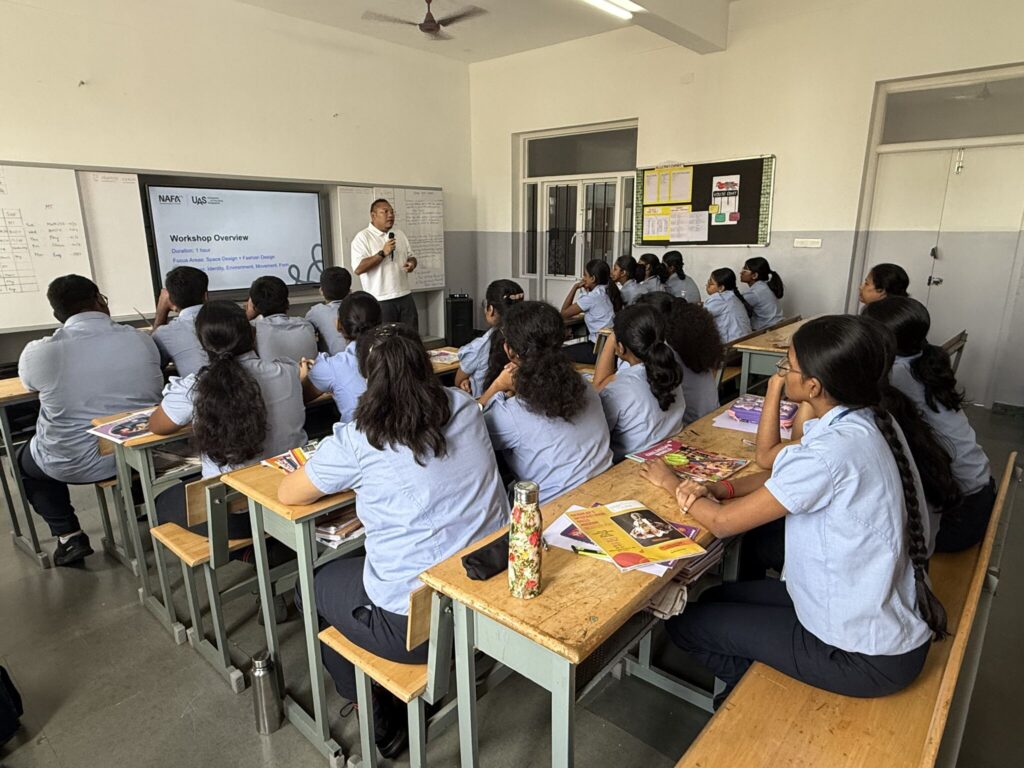
ISRC partnered with Nanyang Academy of Fine Arts (NAFA), Singapore to host design workshops across Ahmedabad, Kolkata, Coimbatore & Chennai- empowering students with creative skills and global exposure. Bringing Singapore’s Creative Education to India The Nanyang Academy of Fine Arts (NAFA), Singapore, in collaboration with ISRC, recently held a successful series of design workshops in India, giving students firsthand exposure to international creative education. With workshops conducted in Ahmedabad, Kolkata, Coimbatore, and Chennai, the initiative aimed to introduce students to design thinking, portfolio building, and career pathways in creative arts. These sessions helped students explore opportunities to study design in Singapore and understand how to build global-ready portfolios. Led by Fadzli Jamil and Jerry from NAFA and coordinated by Keerthana from ISRC, each workshop was designed to bring creative education in India closer to international standards. These design workshops introduced students to foundational concepts in spatial creativity and portfolio development for design courses abroad. The positive response from students and educators was a testament to the growing interest in creative careers after high school in India. In Coimbatore, the workshops witnessed active participation from: SSVM Institutions, Yuvabharathi Public School, Ruh Continuum School | Ruh Early Years, Reeds World Schools, CS Academy, Aditya Vidyashram Residential School & more. Next, the team visited Ahmedabad & Kolkata, where Delhi Public School, The Riverside School & Sushila Birla Girls’ School opened its doors for a session on career opportunities in design and art. The final leg of the workshop series was held in Chennai, wrapping up a month of engaging and inspiring sessions for students who dream of pursuing creative higher education overseas. These workshops allowed students to experience Singapore’s creative education system and gave them the tools to prepare for admissions to top design schools abroad. Why These Workshops Matter These workshops are part of ISRC’s mission to bridge the gap between Indian students and international creative education. By creating awareness, offering guidance & mentorship from NAFA faculty, and real-world insight into creative career options after high school, students across India now have the confidence to explore global design opportunities. View the Workshop Moments Catch behind-the-scenes photos and workshop highlights across cities. Want to Host a NAFA x ISRC Workshop at Your School? Bring international creative education to your students.Reach out to us at info@isrc.edu.in or connect with us on +91 8754546093 to schedule a session. Together, let’s build creative futures!  

Singapore, Study Abroad Guide

What to Pack Before Flying to Singapore for Higher Education

Packing for your move to Singapore as an international student? Here’s a practical checklist based only on ISRC’s verified recommendations. ✈️ Your Singapore Study Packing Checklist Preparing to move abroad for your education can be overwhelming—especially when it comes to packing. To make your transition smoother, we’ve compiled a simple checklist of things international students heading to Singapore should consider carrying. 🎒 Essentials to Pack 1. Travel Documents Valid Passport Student Pass (IPA or In-Principle Approval Letter) Visa & Entry Approval (if applicable) Offer Letter from your university Proof of accommodation Passport-size photos Flight tickets Vaccination records ISRC support documents (if provided) 2. Financial Items Sufficient cash in SGD for the first few days Forex card or international debit/credit card Copies of financial aid/scholarship letters (if any) Bank account opening documents (if prepared) 3. Electronics Laptop + charger Universal power adapter (Singapore uses Type G plug) Mobile phone + charger Earphones/headphones USB drive or external hard disk 4. Clothing Light and breathable clothes (Singapore has a tropical climate) Umbrella or raincoat (frequent rains) Formal wear (for university events or interviews) Comfortable walking shoes & flip-flops Modest clothing for cultural sites or religious places Swimwear (optional) 5. Toiletries & Personal Care Basic toiletries for first few weeks (you can buy most items locally) Bath towel Nail cutter, comb, grooming essentials Prescribed medication + doctor’s prescription Basic first aid kit 6. Academic Supplies Stationery (pens, notebooks, calculator, etc.) Reference books (only if required—books are available in Singapore) Printed copies of important academic transcripts 7. Miscellaneous Lock for hostel cupboards Bedsheets/pillowcases (if needed for hostel stay) Light utensils (plate, spoon, mug, reusable bottle) Small backpack for daily use Sunglasses, sunscreen Worried about forgetting something important? Connect with ISRC and get personalized pre-departure support tailored to your university and accommodation needs. 👉 Schedule Your Consultation Now

Uncategorised

Cost of Living in Singapore for International Students

Understand the essential costs international students should budget for when planning to study in Singapore, including accommodation, transport, food, and lifestyle expenses.  🏙️ Living in Singapore: What You Need to Know Studying in Singapore comes with the advantage of being in one of Asia’s top educational and economic hubs. But with world-class infrastructure and a high standard of living comes a certain price tag. Here’s a straightforward breakdown of the major monthly expenses international students typically need to budget for: 💸 Breakdown of Average Monthly Costs (in SGD) Expense Category Estimated Cost (per month) Accommodation (shared or student hostel) S$600 – S$1,000 Food & Meals (mix of hawker centre & home-cooked) S$300 – S$450 Transport (MRT, buses) S$80 – S$120 Utilities & Internet (if not included in rent) S$60 – S$100 Mobile Phone Plan S$30 – S$50 Personal & Lifestyle (entertainment, shopping, etc.) S$100 – S$200 Study Materials (books, stationery) S$30 – S$80 📌 One-Time & Annual Costs to Consider Student Pass (Visa) Application Fee: S$30 Issuance Fee: S$60 (additional S$30 if visa required) Medical Check-up (if applicable): Varies Airfare to Singapore: One-time cost depending on origin Initial deposit for accommodation: Often 1–2 months’ rent upfront ✍️ Things to Remember Costs vary depending on personal lifestyle and accommodation choice. Cooking at home, using public transport, and opting for shared housing can help lower monthly spending. Always plan for emergency or unexpected expenses. Want help budgeting for your study abroad journey in Singapore? Talk to ISRC for personalized financial guidance and planning support. 👉 Get in Touch with Our Student Advisors

Uncategorised

Singapore Student Visa Documents Checklist (ICA Requirements)

Prepare for your Singapore Student Pass application with this complete documents checklist as required by ICA- based entirely on ISRC’s guidance and student experiences. 📝 ICA Requirements: Documents You Must Prepare For your Student Pass (through SOLAR system), the Immigration & Checkpoints Authority (ICA) requires the following: Passport (bio-data page) photocopy Passport-sized photo Original birth certificate (native + English translation if applicable) Financial proof: recent bank statements, fixed deposit or savings account (for applicants needing a visa) If a parent or step-parent is a Singapore citizen or permanent resident, also include: Official marriage/divorce certificate + custody papers Parent’s highest educational certificate Parent’s employment letter or business registration (issued within the past month) Parent’s CPF contribution for the past 12 months Parent’s Income Tax Assessment Notices for the last 3 years If your spouse is a Singapore citizen or permanent resident, include: Marriage or divorce certificate Spouse’s highest educational certificate Spouse’s employment/business certification Spouse’s CPF and Income Tax records for last 12 months / 3 years All copies must be latest- not older than one month (for documents like employment letters or CPF contributions). ⏳ Processing Details Processing time: Typically 4–5 weeks from receipt of application and documents. Delays possible—check your email (including spam regularly). Approval: ICA issues the In-Principle Approval (IPA) letter once approved. You must then pay the issuance fee (S$60, plus S$30 if visa is required) online. After payment, book an e‑appointment (ICA e‑appointment site) to complete formalities at ICA Building. Visit must be within one month before your course start date. Bring all original documents including those listed above and: LOA/offer letter from Singapore institute Medical report (if required) Embarkation/Disembarkation card Passport and photo Acknowledgement receipt of Student’s Pass Terms & Conditions 🎓 Final Step: Receiving Your Student’s Pass ICA issues your digital Student Pass within 24 hours via email once on-site formalities are complete. This pass officially allows you to begin your studies in Singapore. ✅ What to Remember Use the ICA-approved SOLAR system for passing application. New applications must be submitted 2-6 months before course commencement. YOU do not need to be in Singapore during processing- only for final approval steps. Make sure to bring every original document to ICA Building (Level 4, 10 Kallang Road, Singapore) for verification. Want help compiling your ICA checklist and completing every step without stress? Let ISRC be your visa partner. 👉 Schedule a Free Student Pass Pre-check Consultation Now

Study Abroad Guide

Singapore Essentials: Healthcare & Visa Clarity for International Students

Learn how Singapore supports international students with accessible healthcare and understand the difference between a Student Pass and Tourist Visa. 🏥 Affordable Healthcare for International Students in Singapore Singapore offers international students access to affordable and quality healthcare through government-subsidised clinics and hospitals. As a student with a valid Student Pass, you’re eligible for subsidised medical care under certain schemes. Most educational institutions also guide students on obtaining basic health insurance or assist with group plans to ensure you’re covered for general checkups, minor treatments, and emergencies. This system makes healthcare accessible, safe, and budget-friendly while studying in the country. 🛂 Student Pass vs Tourist Visa: What’s the Difference? If you’re planning to study in Singapore, applying for a Student Pass is crucial — not a Tourist Visa. Student Pass: Issued to international students enrolled in full-time programs, this pass allows long-term residence, access to healthcare subsidies, eligibility for part-time work (in some cases), and smooth university compliance. Tourist Visa: Meant for short visits, this visa does not allow studying or working in Singapore. Using a tourist visa to study can result in visa issues or legal complications. So, before finalizing your travel, make sure you apply for the correct document that aligns with your academic goals. ✅ CTA Block: Confused about the right visa or healthcare coverage? Let ISRC guide you step-by-step through everything you need to prepare. 👉 Talk to an Advisor Today

Uncategorised

The Step-by-Step Admission Process for Studying Abroad

Get a clear overview of ISRC’s structured approach to securing international university admissions — from consultation to visa support. Step 1: Initial Consultation Your study abroad journey begins with a personalized consultation. At ISRC, we take time to understand your academic background, career goals, and financial situation. This helps us tailor a pathway that best suits your unique profile and aspirations. Step 2: Program Selection Based on your interests and qualifications, ISRC assists you in selecting the most suitable programs and universities. We focus on aligning your ambitions with institutions that offer the right courses and future opportunities. Step 3: Application Submission ISRC provides comprehensive support throughout the entire application process. From filling out application forms to compiling transcripts, writing Statements of Purpose (SOPs), and gathering recommendation letters — we guide you every step of the way to ensure timely and accurate submissions. Step 4: Admission & Visa Assistance Once you receive admission offers, ISRC helps prepare all necessary visa documentation and provides relocation guidance. Our hands-on assistance makes your transition abroad smooth, stress-free, and well-organized. What You’ll Need (Minimalist Checklist) Academic transcripts Statement of Purpose (SOP) Letters of recommendation Passport and identification documents Financial proof or sponsorship details Testimonials “ISRC made my study abroad dream a reality. Their step-by-step guidance from program selection to visa support was invaluable.” – Shriya ✅ Start Your Study Abroad Journey the Right Way Book your free consultation with ISRC today and take the first step toward studying overseas. 👉 Get Started Now

Study Abroad Guide

How to Choose the Right Course & Country for You: Study Abroad Guide

The Ultimate Study Abroad Guide by ISRC Choosing the right course and study destination can be overwhelming. Discover how ISRC simplifies your decision-making process by aligning your goals, academic background, and financial situation with the best country to study and university selection. Step 1: Initial Consultation ISRC begins by thoroughly understanding your academic history, career aspirations, and budget constraints. This personalized consultation lays the foundation for a tailored education path—whether you’re aiming for a professional course or exploring new fields. Our expert course consultation ensures you choose the right course that complements your strengths and ambitions. Step 2: Program Selection Based on your profile, ISRC curates a shortlist of programs and universities that perfectly match your interests. Every recommendation is made with comprehensive knowledge of admission criteria, tuition fees, and post-study work opportunities—helping you make informed university selections aligned with your future goals. Step 3: Choosing the Best Country to Study ISRC helps you identify ideal study destinations based on your budget, lifestyle preferences, and long-term career plans. We focus on countries that: Offer programs aligned with your chosen field Have student-friendly visa and work policies Provide scholarships or tuition grants to ease financial burden Our study abroad guide ensures you pick a country that supports both your academic success and personal growth. Step 4: Application Support With your course and country finalized, ISRC guides you through every stage of the application process. From submitting transcripts to crafting compelling statements of purpose and gathering recommendation letters, our experts ensure your application stands out. Step 5: Admission & Visa Assistance Once accepted, ISRC continues to assist with visa documentation, interview preparation, and other formalities. We also help plan your relocation for a seamless transition into your new academic environment abroad. What You’ll Need for Course & Country Selection Academic transcripts & certificates Clear career goals and interests Budget details including funding options Passport & identification documents Why Choose ISRC for Your Study Abroad Journey? At ISRC, we specialize in guiding students through every step from course consultation to securing admissions in top universities worldwide. Our expertise covers university selection, financial aid including scholarships vs tuition grants, visa processing, and post-admission support—ensuring a smooth pathway to studying abroad.  

Singapore

Why Study in Singapore: Education Meets Opportunity

Thinking of studying in Singapore? Discover why this global education hub is the perfect blend of top-tier academics, safety, multiculturalism, and future-ready career opportunities. Singapore: A Global Education Powerhouse If you’re dreaming of a future that combines quality education, global exposure, and career opportunities—Singapore checks all the boxes. This small island nation is more than a financial hub; it’s a rising star in global education, attracting students from over 100 countries. From safety and culture to affordability and tech-driven learning, here’s your one-stop guide to why students across the world are choosing Singapore. 1. World-Class Education, Globally Recognized Singapore’s education system ranks among the best in Asia and globally. Students benefit from: Globally ranked institutions Industry-relevant curriculums A strong focus on innovation and entrepreneurship Whether it’s Business, IT, Hospitality, or Design, programs are structured to meet the demands of tomorrow’s workforce. 2. English-Taught Programs With English as the main medium of instruction, international students don’t face a language barrier when adapting to coursework or daily life—making Singapore a smooth academic transition. 3. Pathways to Career & PR Opportunities Education in Singapore often becomes a launchpad to long-term career opportunities. Many institutions offer: Internships with top regional companies Pathways to employment post-graduation PR advantages for international students with strong academic profiles 4. Tuition Grant Schemes & Financial Aid Unlike many countries, Singapore offers tuition grants even to international students. These help: Reduce the financial burden Increase access to top-quality programs Some grants may come with a post-study work commitment—providing valuable job experience in return. 5. A Multicultural, Global Student Environment Singapore welcomes students from over 100 nationalities, making it a diverse and inclusive education destination. Students enjoy: Exposure to global perspectives International networking opportunities Cultural exchange in a safe and welcoming society 6. Safety and Quality of Life With one of the lowest crime rates in the world, clean urban infrastructure, and efficient public transport, Singapore ensures a high quality of student life. Parents feel assured, and students feel empowered. 🔍ISRC’s Role: Your Singapore Study Partner At ISRC, we’ve helped hundreds of students successfully transition into top universities in Singapore. We guide you through every step: University selection based on your goals Course matching Financial support options Visa and documentation End-to-end application support

Uncategorised

Scholarships vs Tuition Grants: Understanding the Key Differences and Application Process

Considering whether to pursue a scholarship or a tuition grant? Let’s delve into the disparities between the two, their criteria for eligibility, and how ISRC can facilitate access to both funding options. Funding Your Overseas Aspirations: Where to Begin Embarking on an educational journey abroad is undoubtedly enriching but often accompanied by financial implications. Fortunately, avenues such as scholarships and tuition grants exist to alleviate some of these burdens. But what sets scholarships and tuition grants apart? Who is eligible to apply, and what are the application procedures? Let’s dissect these nuances to enable you to focus on your academic ambitions rather than financial constraints. Scholarships: Bridging Merit with Opportunities Scholarships serve as competitive financial aids granted to students based on academic prowess, extracurricular accomplishments, or specialized skills. Typically: They can be merit-based or need-based. Offered by educational institutions, governmental bodies, or private entities. Applications are submitted either before or during the admission process. Example: An applicant demonstrating exceptional academic achievements or leadership qualities might receive a partial or full scholarship from their chosen university. Eligibility factors may encompass academic transcripts, personal statements, extracurricular engagements, and letters of recommendation. Tuition Grants: Flexible Financial Assistance Distinct from scholarships, tuition grants function differently by offering reductions in tuition fees. Usually provided by the host country’s government or university bodies, these grants aim to enhance accessibility for international students. Key features include: They are typically non-competitive. Application processes are either automatic or require minimal effort. Primarily accessible in regions like Singapore, where international talent is actively supported by governmental initiatives. Example: In Singapore, students enrolled at institutions like SIM or NAFA may qualify for tuition grant subsidies, significantly reducing overall expenses. Some grants may entail a commitment to work in the country post-graduation. Distinguishing Scholarships from Tuition Grants: A Comparative Overview FEATURE Based On SCHOLARSHIPS Merit, need, talent TUITION GRANTS Country’s education policy How to Apply Detailed application + documents Often auto-applied or simple form Offered By Universities, governments, private organizations Governmental or university boards Amount Covered Partial/full tuition fees with potential stipends Tuition fee reductions only Eligibility Competitive Broader eligibility criteria; sometimes solely enrollment-based   Navigating the Application Process with ISRC Navigating the intricacies of funding applications can be daunting; however, ISRC is here to simplify the process. We offer services such as: Assisting in identifying courses with optimal scholarship prospects. Aid in crafting compelling essays, statements of purpose (SOPs), and recommendation letters. Highlighting programs backed by grants that align with your eligibility. Providing personalized consultations for a comprehensive review of your academic profile. Guiding you through every phase of the application submission and acceptance process. Maximizing Opportunities: A Strategic Approach Many students find value in combining both scholarships and tuition grants. For instance, securing a merit-based scholarship from a university alongside a tuition grant from the Singaporean government can substantially reduce educational expenses. Final Guidelines Before Initiating Your Application: Before commencing your application process: Research country-specific grant opportunities along with their conditions. Enhance your academic credentials and extracurricular involvements. Craft a compelling personal statement or essay. Seek assistance promptly to mitigate last-minute stress.

Scroll to Top